Choosing a material
Roofing materials compared for Huntersville, NC homes
There is no single best roof, only the best fit for your house, budget and priorities. Here is how the common choices in the Carolinas compare in plain terms.
Architectural asphalt shingles
This is the most common roof in our area, and for good reason. Architectural (also called dimensional or laminated) shingles are made of layered asphalt with a granule surface, and they give a thicker, textured look than the flat three-tab style they largely replaced. They are widely available in many colors, most roofers know them well, and they can be installed on a wide range of roof shapes.
Shingle lines differ by manufacturer, and the better lines tend to be heavier, with stronger wind and impact ratings. They handle heat reasonably well when the attic is ventilated, and they are fairly quiet in rain. Hail can bruise them and knock granules loose, which is why storm inspections matter. Repairs are usually straightforward because replacement shingles are easy to find. Our roof replacement page walks through how a tear-off and re-roof goes.
Metal roofing
Metal comes as standing-seam panels with concealed fasteners, or as exposed-fastener panels that are simpler and more common on outbuildings. Standing seam sheds water and tends to resist wind because the panels interlock. Metal reflects a lot of the sun's heat, which can help with summer cooling, though attic ventilation still matters.
It is lighter than many people expect, but rain can sound louder on it unless the deck and insulation are built to dampen noise. Hail can dent thinner panels even when they do not leak, so look at the panel thickness and finish. Installation takes specific skill, especially around penetrations, valleys and trim, and the cost is usually higher than asphalt shingles because both material and labor are more specialized. Read more on our metal roofing page.
Other options you may hear about
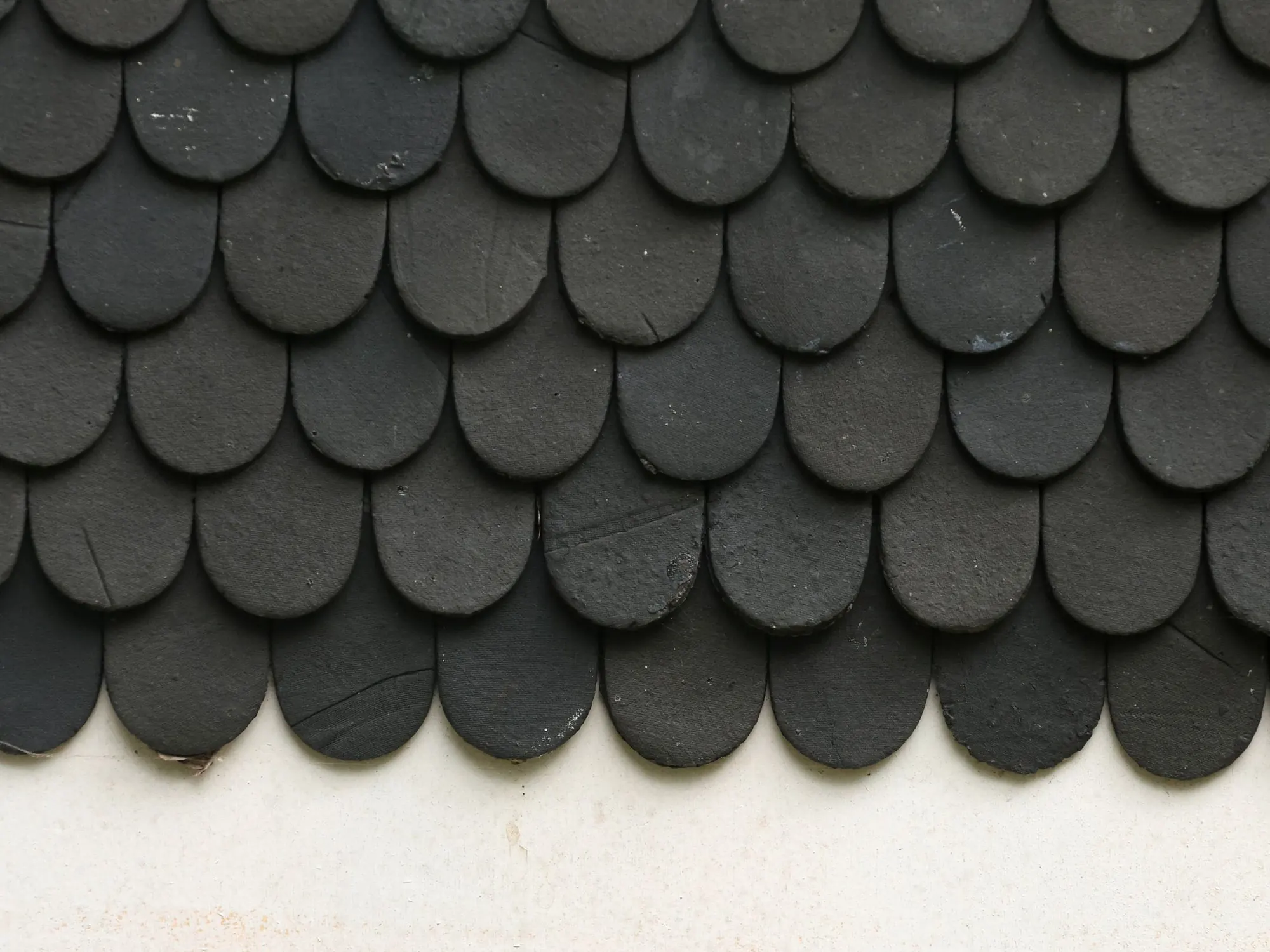
Synthetic slate and shake. Molded products that imitate slate or wood. They are lighter than real stone and can look convincing, but quality varies by product, so ask for the manufacturer's installation requirements.
Natural slate and clay or concrete tile. These are long-lived and attractive, but heavy. The framing has to be able to carry the weight, which may mean an engineer's review. They are also easier to damage when walked on, and fewer local roofers do the work.
Wood shake. It has a distinctive look but needs more upkeep, and in some neighborhoods HOA or local fire rules limit it. Check before falling in love with it.
Low-slope membranes. Flat or very low pitches, like some porches and additions, use rolled or sheet membranes rather than shingles. That is a different system with different details.
Side by side, in words
| Heat | Shingles do fine with good attic ventilation. Metal reflects more sun. Tile and slate are heavy and slow to heat up. |
|---|---|
| Hail | Shingles can bruise and lose granules. Metal may dent but often stays watertight. Tile and slate can crack. |
| Wind | Higher-rated shingle lines and interlocking metal panels perform best when installed to the maker's instructions. Edges and fasteners matter most. |
| Noise | Shingles are quiet. Metal can be louder in heavy rain unless the roof assembly dampens it. |
| Weight | Shingles and metal are light enough for most framing. Slate, clay and concrete tile are heavy and need structure to match. |
| Lifespan | Generally, shingles are shorter-lived, metal longer, slate and tile longest. Real life depends on installation, ventilation and weather. |
| Repairability | Shingles are easy to patch. Metal and tile need matching parts and the right hands. Color match can be a challenge for all of them. |
What drives the cost, in words
Material is only part of it. Roof size, pitch, number of layers to remove, deck repairs, flashing details, chimneys, skylights, access around landscaping and permits all move the number, whatever you pick. Specialty materials add cost through the product itself and through labor that needs more skill and time.
That is why comparing materials from a chart only goes so far. Our page on how roof pricing works explains what shows up on a written proposal, and why we do not quote a figure before looking at the roof.
How to choose
Start with what matters to you: budget, how long you plan to stay, the look of the house, and what your neighborhood allows. Then ask a roofer to price two options side by side with the same scope, so you are comparing materials rather than different jobs. Ask which one they would put on their own house, and why. A good answer includes trade-offs.
If your roof has hail history, ask how each material tends to hold up and what your insurer may require. Details like underlayment, flashing and ventilation matter as much as the top layer, so make sure they are part of the proposal.
What to do next
If you are weighing options for your own house, we are happy to talk it through. Read how to choose a roofer, or book a roof walk and ask for a side-by-side proposal.
Questions we get on the phone
Do metal roofs attract lightning?
Generally no. A metal roof does not attract lightning more than other roof materials. If a strike does occur, metal is noncombustible and tends to spread the energy over a large area. Proper grounding and a licensed electrician matter more than the roof surface when you are thinking about lightning protection.
Can new shingles go over the old ones?
Sometimes, depending on local rules, the condition of the existing roof and the manufacturer's instructions. Most reputable roofers prefer a tear-off so they can inspect and repair the deck underneath. Ask for the reasoning in writing, since an overlay can hide problems that show up later.
Is a heavier roofing material always better?
No. Heavier materials like tile or slate last a long time but need framing built to carry them. Lighter products can perform very well when installed correctly. The right choice depends on your structure, climate, budget and what your neighborhood or HOA allows.
Have Tom walk the roof before anyone talks about money.
Monday to Friday 7am to 6pm. Saturday 8am to 2pm. Active leaks answered after hours.