
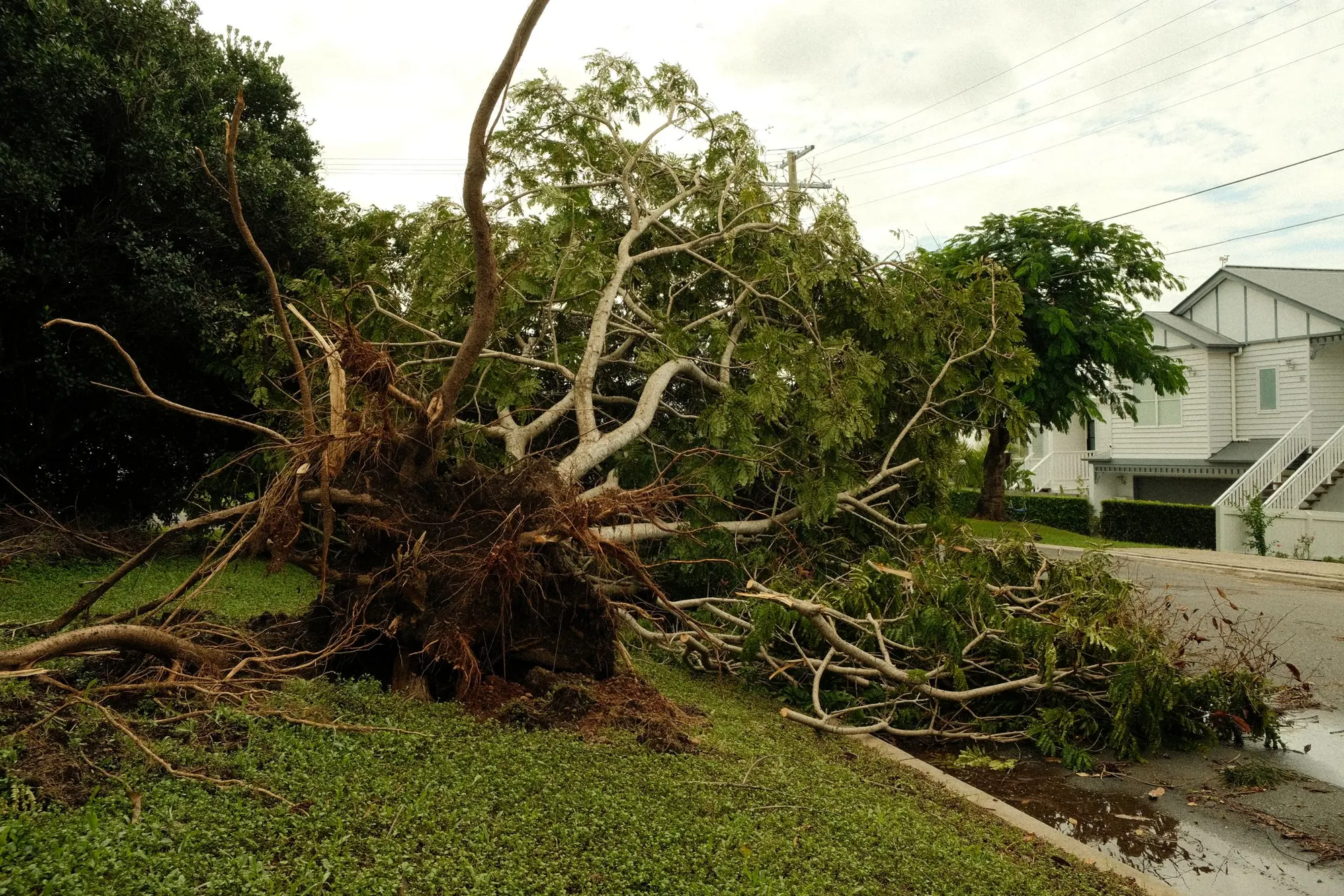
A tree fell on your house in Charlotte, NC: what to do first
Stay calm, get everyone safe, and resist the urge to start pulling branches. The order you do things in matters.
When a tree comes down on a house, everything feels urgent at once. A few clear steps, taken in the right order, protect your family, your property and your insurance claim. This page walks through what to do in the first hour, who to call, and what to expect when a crew arrives.
Step one: safety before anything else
Get everyone out of the damaged part of the house and keep pets away too. Roof structure that looks fine may have been weakened. A ceiling or wall can fail without warning. If you smell gas, hear hissing or see damaged wiring, leave the building and stay out. If anyone is hurt, trapped or in danger, call emergency services right away. Nothing else on this list matters more.
Treat every wire as live
Power lines can be tangled in the tree or buried in the branches where you cannot see them. A line on the ground, on the tree or draped over a fence can carry power even when the lights are out. Stay well back, keep children and pets away, and do not touch the tree or anything in contact with it. Call your utility to report the line down. If a line is touching the house or you see sparks, tell the emergency dispatcher too.
Who to call, in a sensible order
- Emergency services if anyone is hurt or there is fire, gas, sparking wire or risk of collapse.
- Your utility if lines are down or tangled in the tree, or if a service drop was pulled off the house.
- Your insurance company or agent to open a claim. Many policies expect prompt notice, and the adjuster will tell you what they need.
- A tree crew with climbing and rigging experience, to make the situation safe.
- A roofer or restoration company for temporary protection and repairs after the tree is off.
If you cannot tell whether it is an emergency, treat it like one and ask. It is better to be told it can wait than to wait on something that could not.
Document before anything moves
Before the tree, the debris or the damaged materials are touched, take photos and video. Capture the whole tree from several angles, where it contacts the house, the roof, the ceiling inside, any damaged belongings and the surrounding yard. If it is safe, note the date and time. Do not throw away damaged items until your insurer says you can. Good records tend to make the claim process smoother, and they help the crew plan the work.
Why a crew works from the top down
It is tempting to think a few strong people with a truck could just pull the tree off the roof. That is how a bad day gets worse. A fallen tree is usually under tension, with some limbs bent and held in place by the roof or the ground. Cutting in the wrong place can make a section snap, roll or spring back. Dragging the trunk can rip open the roof, collapse weakened framing and drop heavy wood through the opening.
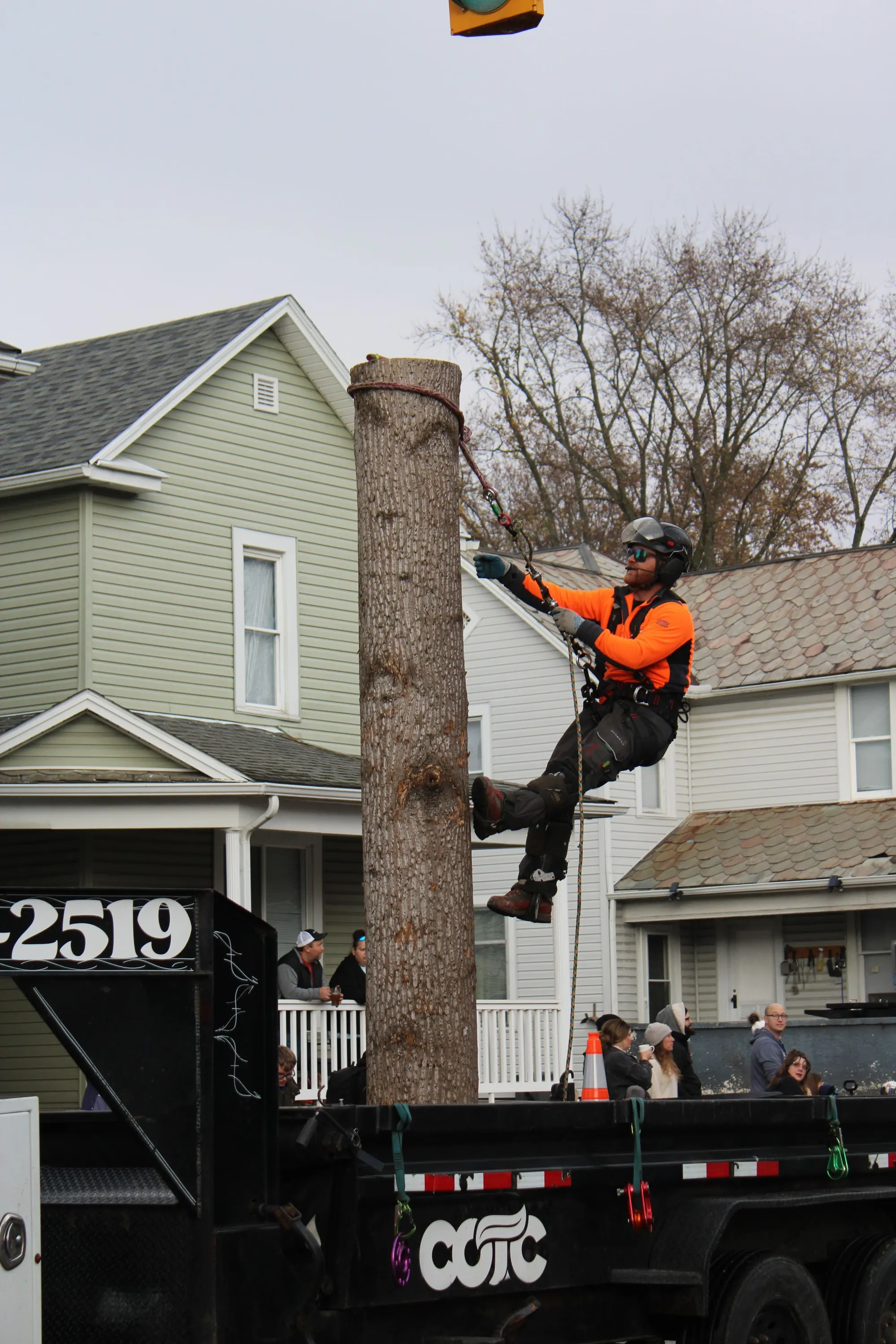
A trained crew studies where the weight rests, where the tension is and what is holding the tree up. They usually work from the top of the tree down, taking off small sections that are tied to rigging lines and lowered by hand or by machine, so nothing lands on the damaged structure. In tight spots, a crane or lift may be needed. This takes planning and a calm pace, which is why it often looks slower than people expect. You can read more about how this works on our emergency tree service page, and about the heavy-lift option on the crane-assisted removal page.
Tarping and temporary protection
Once the tree is off, an open roof needs covering so rain does not do more damage. Some tree companies and many roofers can place a temporary tarp. Others handle only the tree work. Ask what is included when you call. If the damage is severe, keep in mind the structure may need to be checked by a qualified professional before you go back inside.
Questions to ask a crew
- Do you carry liability insurance and workers' compensation, and can you send me proof?
- Who will be on site, and who is making decisions about the cuts?
- How do you plan to keep the tree from moving onto the damaged roof?
- Is the quote written, and does it include hauling the wood away?
- Will you take photos of the damage and work for my insurer?
Be careful with anyone who knocks on your door after a storm, asks for payment up front or pressures you to sign right away. Take your time to compare, even in a hurry.
A word about insurance
What a policy covers varies a lot. Some policies treat a tree falling on a structure differently from a tree that fell without hitting anything, and deductibles, limits and exclusions differ. Your agent or adjuster is the one who can tell you what applies. Ask about the claim steps, what documentation they want and whether they need to see the damage before removal begins.
What to do next
If a tree is on your house right now, call the storm line at (704) 555-0148. If the situation is stable and you want a written plan, book a free quote and we will come look at the tree and the damage. Once the emergency is over, an arborist consultation can check the other trees on your lot, and our guide on how to tell if a tree is dying or dangerous explains what to watch for.
Questions about this
Should I move the tree myself to get it off the roof?
No. A fallen tree often holds tension, and cutting or pulling in the wrong spot can make it shift, spring or drop heavy wood through the roof. Wait for a trained crew with rigging gear. If anyone is in danger, call emergency services first.
What do I do first if a tree falls on my house?
Get everyone out of the damaged area and call emergency services if anyone is hurt or you smell gas, see fire or see wires. Keep clear of any power lines. After that, take photos, call your insurer and then a qualified tree crew.
Should I take photos before the tree is removed?
Yes, if it is safe. Photograph the whole tree, where it touches the house, and any damage inside and out. Keep damaged items until your insurer says otherwise. Clear records usually make the claim easier and help the crew plan.
Will a crew cut the tree and also cover the roof?
It depends on the company. Some place a temporary tarp, while others only handle the tree and expect a roofer to follow. Ask what is included when you call, so you are not left with an open roof while it rains.
Get a written number, on the spot.
Free on-site quote, usually within 48 hours. The number we write is the number you pay.