
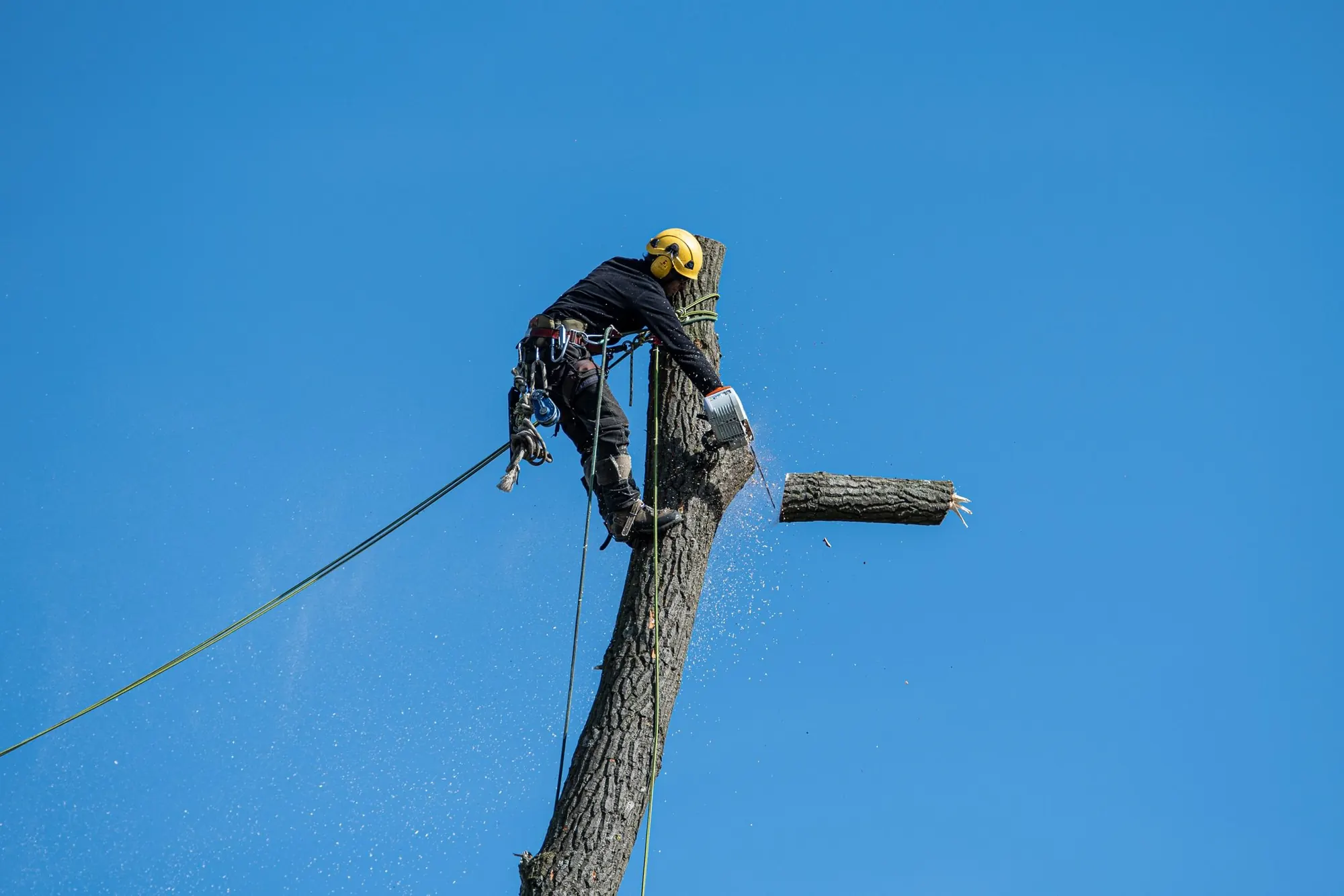
Tree removal cost in Charlotte, NC
The spread is wide: a small tree in a tight yard costs far less than a towering pine over the roof. Here's where the number actually comes from.
Tree removal prices in Charlotte vary a lot, from a mid-size oak or pine with decent access and nothing underneath but grass, to a towering tree over a house. Where your tree falls depends on three things: how tall it is, what's under it, and how the wood has to come down. This page covers what moves the number, because it's the question everyone has before they call. The number itself is written after we see the tree.
How tree height changes the job
Height drives the base number more than anything else, since it sets how much rigging, rope work, and time the job takes before you even get to complications.
| Tree height | What it means for the job |
|---|---|
| Small (under 30 ft) | Light rigging, usually the shortest jobs |
| Medium (30–50 ft) | More rope work and more cutting time |
| Large (50–75 ft) | Heavy rigging and a bigger crew day |
| Towering (75 ft+) | The longest jobs, and often a crane conversation |
A lot of Charlotte's canopy sits in the large-to-towering range without homeowners realizing it. The willow oaks and water oaks that shade Myers Park and Dilworth are 80 to 100 years old in places, easily 70 to 90 feet with a crown spread to match, and a loblolly pine that looks modest from the street can still top 80 feet once you're standing under it with a clinometer.
What moves the price
Two trees the same height can price very differently. Here's what actually swings the number once height sets the baseline.
| Factor | Effect on price |
|---|---|
| Over a roof, deck, fence, or line | Adds cost for rigging and protection |
| Crane required | Adds a per-day crane and operator charge |
| Tight or blocked access | Adds cost for hand-carry work |
| Hollow or dead/hazardous tree | Adds cost, slower cuts, more rigging |
| Stump grinding | Priced separately by diameter and root flare |
| Hauling debris off-site | Usually included; extra loads add cost |
The single biggest swing is a structure underneath. Nothing free-falls over a house on our jobs. An 82-foot willow oak leaning over a slate roof in Myers Park gets taken down in sections, each piece roped and lowered by a groundie instead of dropped, with plywood laid across the lawn first. That's slower and takes more hands than a tree with open ground to fall into, and the price reflects the extra rigging time, not a markup for the sake of it.
Trimming vs. removal
Trimming and pruning generally cost less than full removal on the same tree. The climber still has to get up into the canopy and make careful cuts, so the labor and rigging aren't dramatically less, but there's no stump, no full drop, and a lot less hauling once the cut branches are chipped. If a tree just needs deadwood out or a crown lifted off the roofline, that's a trim, not a removal, and it prices accordingly. See our tree trimming page for what a typical prune involves.
Stump grinding
Stump grinding is priced by diameter and root flare width, and it's less when we're already on site for the removal, since the grinder doesn't need a separate trip. Grinding an old stump from a tree someone else took down years ago is the same process, just priced as its own job. Full detail on depth, backfill, and what happens to the grindings is on the stump grinding page.
Emergency and storm work
Emergency work is quoted on site, the same way routine work is, and it costs the same. There's no after-hours surcharge and no storm markup. Nights, weekends and hurricanes cost the same as a Tuesday. What changes in an emergency isn't the pricing model, it's the speed: on the storm line, we call back within 15 minutes and get someone on site within 4 hours anywhere in Mecklenburg County, or the first hour of crew time is free. A tree down across a driveway after a summer thunderstorm, or a loblolly pine that snapped in a hurricane remnant working up from the Carolina coast, gets the same flat-rate quote as a routine removal, just faster.
Why estimates vary between companies
Two companies can walk the same tree and come back with numbers that don't look related. Some of that is genuine judgment, how much rigging a job actually needs, whether a trunk section reads as hollow. But a lot of it comes down to what's baked into the number. A quote with no certificate of insurance behind it, or one written by a salesperson who isn't the person climbing, is a different product than a flat rate written by an ISA Certified Arborist who's also the one deciding what gets cut. Lowball bids tend to leave things out, hauling, stump grinding, a second trip for cleanup, and add them back as surprises after the crew is already there. Ours is written once, with everything included, before anyone picks up a saw.
Get your number
You don't need to guess. Run your tree through the Job Sizer: three taps, height against the house, what's underneath, what you need, and your name and number unlock a range. When you're ready for the real number, the flat rate good for 60 days, book a site visit and Wes or another arborist will walk the tree with you in person.
Questions about this
Why does the price vary so much?
Height sets the baseline, but what's underneath, access, and whether the trunk is sound move it a lot from there. A 40-foot tree in open yard and a 40-foot tree leaning over a roof with a fence blocking truck access can be very different jobs, even though they're the same species and height.
Does the removal price include stump grinding?
Not automatically. Removal and stump grinding are priced separately, with the stump priced by diameter, though it costs less when we grind the same visit we remove the tree. Tell us during the estimate if you want the stump handled too and we'll quote both together.
Do you charge extra to haul the wood away?
Hauling standard debris off-site is built into the removal price already; we don't leave a pile of logs and brush in your yard. The one exception is if you specifically want large trunk rounds left behind for firewood, which is free to request but means less gets hauled, not more cost.
Will the price go up after you start cutting?
No, not for anything we could see beforehand. The flat rate we write is good for 60 days and becomes the invoice number. The only exception is a genuine surprise inside the tree, hidden rot or a hollow trunk, for example, and you'll see a photo of it before we touch anything further.
Get a written number, on the spot.
Free on-site quote, usually within 48 hours. The number we write is the number you pay.